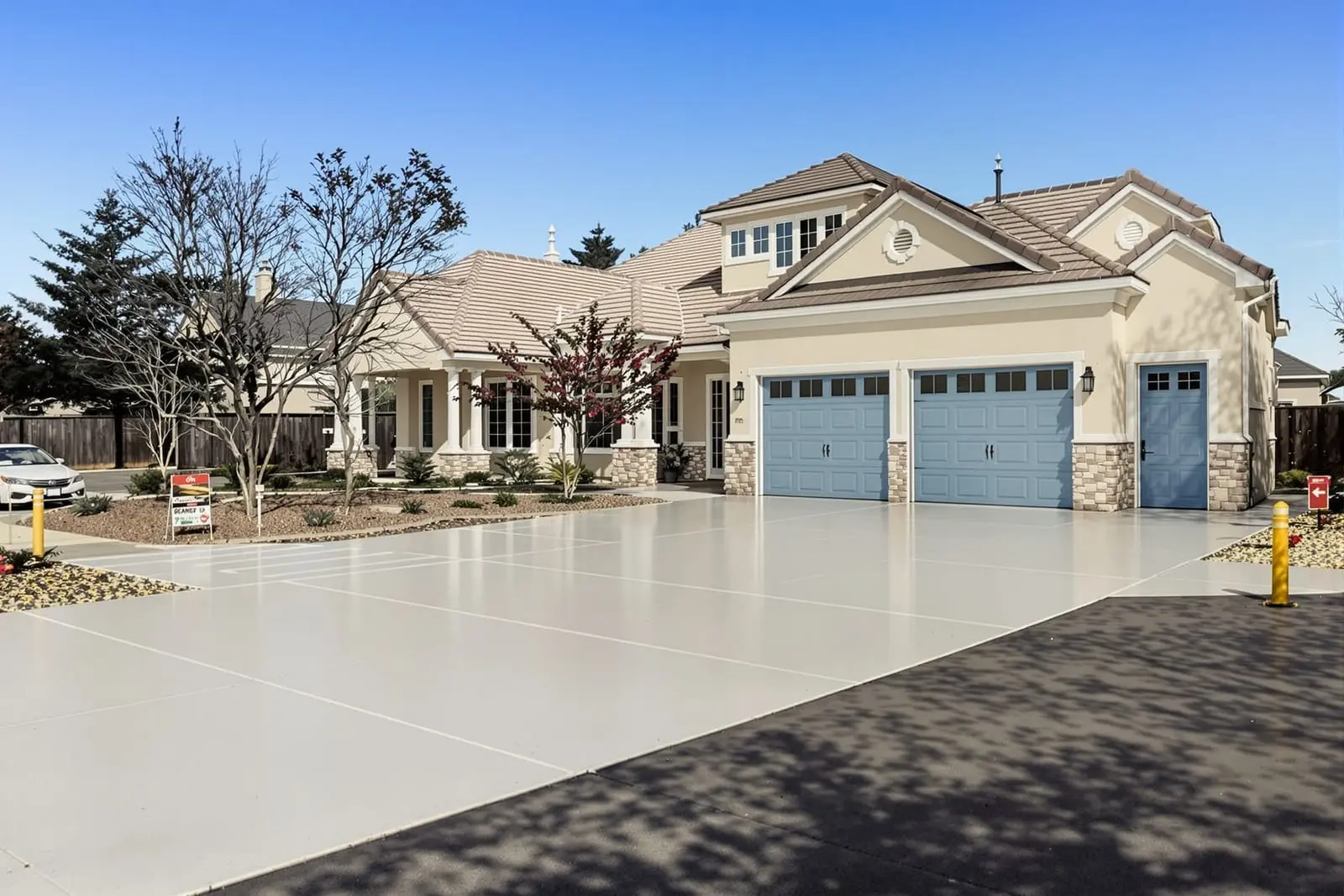
Support your business with reliable commercial concrete paving in Pittsburgh, PA. We install heavy duty concrete for lots, drives, and loading areas that handle traffic and equipment. From site prep to finishing, our team delivers smooth, long lasting paved surfaces for your property.
Brava Concrete Pittsburgh provides professional commercial concrete paving throughout Pittsburgh, PA and the surrounding area. Our licensed, insured crew delivers safe, clean, on-time work with a free estimate before anything begins. Call (412) 231-9528 or request your free quote.
Commercial Concrete Paving for Pittsburgh Businesses
Brava Concrete Pittsburgh provides commercial concrete paving built for the way this city actually operates: steep streets, freeze–thaw cycles, salt, bus traffic, delivery trucks, and tight construction schedules. We focus on durable pavement systems for small storefronts, medical offices, retail centers, warehouses, schools, churches, and industrial sites throughout Allegheny County.
Instead of treating every job the same, we look at how your pavement will be used. A drive‑through lane at a bank needs different thickness and reinforcement than a loading dock at a distribution center on Neville Island. We size slabs, joints, base depth, and concrete mixes to match the real traffic and site conditions you have, not an average estimate from a handbook.
Our crews are familiar with working in busy neighborhoods like Lawrenceville, the Strip District, Shadyside, and around Oakland, where access and parking are tight. We coordinate deliveries, staging, and pedestrian routes so you can keep your business running while we improve your concrete surfaces.
Site Evaluation and Planning in Pittsburgh Conditions
Thorough planning is what separates a commercial concrete paving project that lasts from one that starts spalling within a few winters. Brava Concrete Pittsburgh begins every job with a site walk and evaluation tailored to local soil and weather.
We check existing pavement, drainage paths, downspout locations, utility covers, and nearby building entries. In areas like the South Side and Bloomfield, we often see settlement from old fill and patchwork repairs. We probe soft spots and, when needed, recommend undercutting and rebuilding the base instead of simply pouring new concrete over a failing subgrade.
Drainage planning is critical in Pittsburgh. Snowmelt and heavy summer storms can pool and refreeze, so we design slopes that move water toward inlets or safe discharge points and away from building foundations and door thresholds. We also look at how city plows and private plow trucks will push snow across your lot, which affects where thicker pavements or curb protection make sense.
For larger projects, we can coordinate with your civil engineer or architect to review plan sets, catch construction conflicts early, and suggest adjustments that make the concrete pavements easier and more economical to build without losing performance.
Our Commercial Concrete Paving Process
Once the plan is in place, our commercial concrete paving process follows a consistent, field‑tested sequence managed by a dedicated foreman.
1. Layout and sawcutting: We snap lines to confirm dimensions, mark grades, and cut and remove existing pavement where necessary. Around active storefronts, we schedule removals during off‑peak hours so you keep customer access.
2. Excavation and base preparation: We excavate to the designed depth, typically 8 to 18 inches depending on use. Soft or pumping subgrade is undercut and replaced with compacted stone. We use plate compactors and rollers with proof rolling to identify and correct weak areas.
3. Stone base installation: A well‑graded, compacted aggregate base is installed in lifts. In Pittsburgh, we often recommend thicker base at truck aprons, dumpster pads, and fire lanes to handle heavy wheel loads and turning stresses.
4. Forming and reinforcement: Forms are set to line and grade, and checked with laser levels. Depending on design, we place welded wire fabric, deformed rebar, or dowel baskets at joints. For sidewalks and light‑duty pads we may use fiber‑reinforced mixes instead of conventional mesh if access is tight.
5. Concrete placement and finishing: We pour air‑entrained concrete suitable for freeze–thaw and deicing salts, usually 4,000 to 5,000 psi for commercial work. Crews strike off, bull float, edge, and apply a broom finish appropriate for the use, such as light broom for sidewalks and coarser broom for ramps and steep drives.
6. Jointing and curing: Control joints are cut or tooled at spacings matched to the slab thickness and geometry, which helps manage cracking. We apply curing compound or install wet cure methods to protect the slab in its early strength‑gain window.
7. Cleanup and re‑opening: We remove forms, backfill edges, and ensure drains and inlets are free of slurry. We provide guidance on when light foot traffic, carts, and vehicle traffic can safely resume.
Material and Design Options for Your Project
Commercial concrete paving is not one single product. Brava Concrete Pittsburgh walks you through options so the pavement performance matches your budget and expectations.
Concrete thickness: Sidewalks and patios for light pedestrian use may be 4 inches thick, while drive lanes and parking bays often require 6 inches. Dumpster pads, loading docks, and bus routes may need 8 inches or more with added reinforcement. We base these recommendations on the specific trucks or equipment you use.
Reinforcement options: For retail lots with regular delivery trucks, we often recommend doweled contraction joints and rebar at high stress zones. For long sidewalks or plazas, welded wire fabric or fiber reinforcement can help control shrinkage cracking.
Surface finishes: Broom finish is standard for slip resistance in our winter climate. For high‑profile entries or outdoor dining near places like Market Square or Walnut Street, we can incorporate decorative borders, exposed aggregate bands, or saw‑cut scoring patterns that still perform as commercial‑grade pavement.
Performance upgrades: Air‑entrained concrete and proper entrainment testing are standard for exterior slabs in Pittsburgh. For areas exposed to frequent deicing salts or chemical exposure, we can increase strength, adjust water‑cement ratios, and specify sealers designed for commercial traffic and faster turnaround.
What Drives the Cost of Commercial Concrete Paving
Businesses often ask why two parking lots that look similar are priced very differently. The true cost of commercial concrete paving in Pittsburgh comes from a few key factors.
Access and phasing: Working in tight urban sites or multi‑phase replacements so you can stay open usually requires more mobilizations and handwork. A wide‑open industrial site in Robinson Township costs less per square foot than a downtown parcel with alley access only.
Thickness and reinforcement: Every additional inch of concrete and each layer of rebar or dowels adds material and labor. Heavy truck traffic, bus loops near schools, and fire lanes require more robust designs that cost more up front but avoid early failure.
Base and subgrade repairs: If our evaluation finds poor soils, inadequate base, or previous asphalt overlays hiding deeper problems, we may recommend excavation and new stone. This adds cost but is often the difference between a 5‑year fix and a 25‑year pavement.
Drainage and detail work: Adding curb, ADA ramps, trench drains, radius work at entries, and matching existing thresholds requires skilled labor. Pittsburgh’s hilly terrain also makes grading more complex than flat‑site towns, which can affect pricing.
We provide line‑item estimates so you can see exactly where your money is going and adjust scope thoughtfully instead of guessing.
Common Problems in Pittsburgh Pavements and How We Address Them
Local climate and topography create recurring issues in commercial concrete paving around Pittsburgh. Understanding these problems helps guide better solutions.
Freeze–thaw damage and salt exposure: Repeated cycles crack and scale poorly specified concrete. Brava Concrete Pittsburgh fights this with air‑entrained mixes, proper curing, and, when appropriate, sealers that resist chloride intrusion. We also discuss where to store snow piles so meltwater does not repeatedly saturate the same slab areas.
Drainage and ice at entries: Many local properties have settled slabs that funnel water toward doorways. When we replace or add concrete, we pay careful attention to finished elevations, threshold heights, and slopes so ice sheets do not form in front of customer entrances or loading doors.
Utility conflicts: Older neighborhoods are full of unmarked utilities, vault covers, and mismatched elevations between sidewalks, streets, and alleys. Our crews take extra time to expose and protect utilities, adjust frames and covers to final grade, and coordinate with utility companies as needed.
Patchwork repairs: Years of spot patches create uneven pavements that are hard to plow and hard on pedestrians. When appropriate, we recommend phased full‑depth replacement instead of more patches, so your surface becomes safer, easier to maintain, and more presentable to customers and inspectors.
Working With Brava Concrete Pittsburgh
Our approach to commercial concrete paving focuses on communication and minimizing disruption to your operations.
Scheduling and phasing: We work with building managers, HOAs, facility directors, and small business owners to sequence work. That may mean night or weekend pours for main access drives, or phased replacement so at least one entrance and set of parking stalls remain open.
Permits and codes: We are familiar with City of Pittsburgh and surrounding municipal requirements for sidewalks, aprons, ADA ramps, and right‑of‑way work. Where approvals are required, we can assist with drawings, specifications, and inspections.
Safety and access: Clear signage, barricades, and temporary walkways keep customers and employees away from fresh concrete while preserving access. On sites like medical offices or schools, we coordinate closely to protect vulnerable users.
Post‑project support: We leave you with maintenance guidance specific to your site, such as when to apply sealer, how to handle snow removal on new concrete, and what to avoid during the first winter. If you notice anything unusual as the pavement goes through its first seasonal cycle, you can reach out and we will evaluate it with you on site.
If you manage a property anywhere in the Pittsburgh area and are planning new commercial concrete paving or replacement, Brava Concrete Pittsburgh is ready to discuss options, walk your site, and provide a clear, locally informed proposal.
“
Professional commercial concrete paving, done right the first time, quality materials, honest pricing, and results that last.
Brava Concrete Pittsburgh
Commercial Concrete Paving Across Our Service Area