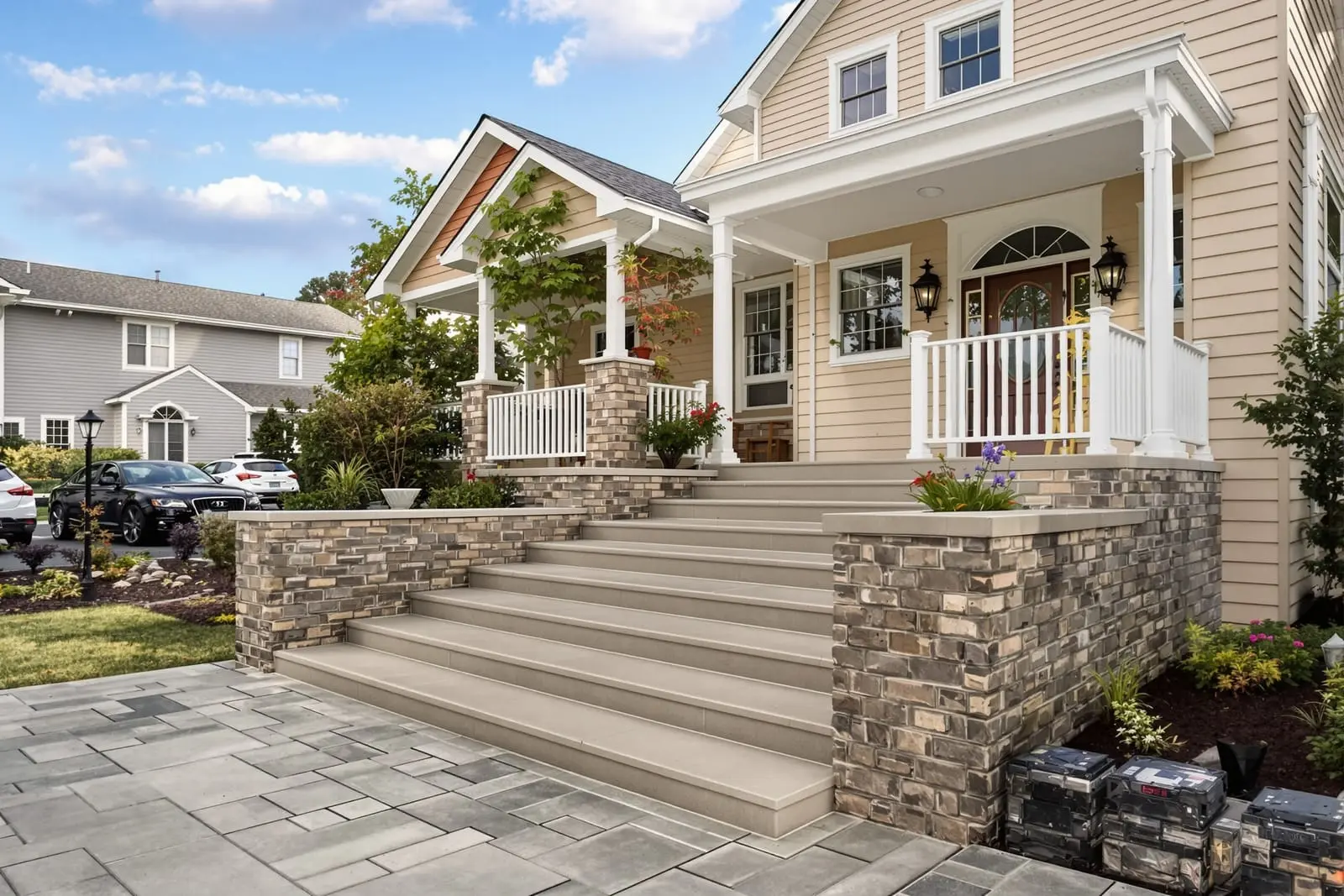
Update your entryway with sturdy concrete steps and porches in Pittsburgh, PA. We build code compliant stairs and landings that improve safety and curb appeal. From simple front stoops to wider porches with railings, our concrete installations are built to handle heavy use and changing weather.
Brava Concrete Pittsburgh provides professional concrete steps installation throughout Pittsburgh, PA and the surrounding area. Our licensed, insured crew delivers safe, clean, on-time work with a free estimate before anything begins. Call (412) 231-9528 or request your free quote.
Concrete steps and porches tailored to Pittsburgh homes
If your front steps are crumbling or your porch feels soft and uneven, it is more than a cosmetic issue. In Pittsburgh, freeze-thaw cycles, road salt, and sloped lots are tough on concrete. At Brava Concrete Pittsburgh, we design and install concrete steps and porches that are built specifically for our hills, weather, and older housing stock.
We start every concrete steps installation with a visit to your property. We look at how water drains around your house, where the existing walkways and driveways sit, and how steep your approach is. A set of three steps going up to a level porch is a very different project from eight steps on a hillside in Beechview. We take measurements, note door swing and threshold height, and confirm code requirements for riser and tread dimensions so you get steps that feel natural and safe to walk on.
From there, we talk through options. Some homeowners want simple broom-finished gray concrete that matches an existing sidewalk. Others prefer a wider landing, a curved front edge, or an exposed aggregate finish that hides salt stains better in winter. We can also integrate a porch slab with the steps so everything is poured together and reinforced as a single structure, which adds strength and reduces future settling at the joints.
How our concrete steps installation process works
A long-lasting set of concrete steps or a porch starts below the surface. For replacements, we break up and haul away the old concrete, then dig out soft or organic material that would cause settling later. In many Pittsburgh neighborhoods, older steps were poured right on clay or cinders. We replace that with compacted gravel, typically 4 to 8 inches, to create a solid base that drains water away from your foundation.
Formwork is the next critical step. We build wood forms that define the exact height and depth of each step and the shape and slope of your porch slab. Local building codes around Pittsburgh usually require uniform riser heights and a minimum tread depth. We use string lines and levels to make sure every riser and tread is consistent from side to side and top to bottom. This keeps the steps comfortable to walk on and minimizes trip hazards, especially in winter when there is snow.
Inside the forms, we install rebar or wire mesh, depending on the size and load of the porch. For a full front porch that may support furniture or heavy planters, we often tie #3 or #4 rebar into the foundation or piers to tie everything together. We set anchor points for future railings at this stage too, so posts are solidly embedded in the new pour instead of being drilled into the concrete later.
When we place the concrete, we use a mix designed for our climate. On jobs scheduled in colder months, we allow extra curing time and sometimes use accelerators when temperatures drop, while avoiding pours when it is too cold or when a deep freeze is forecast during early curing. We vibrate or rod the concrete into the forms to remove air pockets along the riser faces and porch edges, then shape crisp, clean step noses so water sheds away from your house.
Design options for concrete steps and porches that fit your style
Concrete does not have to look plain. Brava Concrete Pittsburgh offers several finish and layout options so your new steps and porch complement your home instead of looking like an afterthought. For many of Pittsburgh’s brick and stone houses, a light broom finish with a subtle border works well. The main walking surface gets a textured broom finish for traction, while we trowel a smooth or slightly different texture border along the edges for contrast.
If you want more character, we can do exposed aggregate finishes that show small stones at the surface. This is especially popular on porches that see a lot of foot traffic, since it hides dirt and salt residue better than smooth gray concrete. On some projects we add integral color to the mix or apply a stain after curing to coordinate with existing masonry, siding, or retaining walls.
We also help you think about layout and comfort. Wider treads and a deeper top landing make it easier to carry groceries, strollers, or deliveries. In neighborhoods with steeper approaches, we sometimes add a “rest step” or a larger intermediate landing so the ascent feels more gentle. For porches, we can pour a thickened edge or small grade beam along the outer perimeter, which helps resist movement on sloped lots that are common across Pittsburgh.
Handrail planning is another key design detail. Even if you are not installing railings right away, we recommend embedding sleeves or anchor points during the concrete steps installation so you have secure attachment spots later without drilling and patching. We can coordinate with your railing fabricator or provide layout dimensions so everything lines up cleanly once the railings go in.
What affects cost and timing for concrete steps in Pittsburgh
Homeowners often ask why two similar-looking front steps projects can have very different prices. The main factors are access, demolition, base preparation, size and complexity, and finish choices. If your steps are close to the street with easy truck access, we can often complete demolition and pouring more efficiently. If we have to pump or wheelbarrow concrete up a long, steep driveway or around tight rowhouse spaces, more labor is involved.
Demolition can also vary. Some old porch and step systems are lightly reinforced and come out quickly. Others contain heavy rebar and thick slabs tied into the foundation, which takes more time and disposal. We price our work after seeing what is actually on site, instead of guessing from a photo, so you know what you are paying for.
Base and drainage conditions matter a lot in Pittsburgh because of our soils and freeze-thaw cycles. If we find poor soil, buried debris, or signs of past water issues near your foundation, we may recommend deeper excavation, additional gravel, or small drains alongside the steps or porch. This costs more up front but helps prevent future heaving, cracking, or water pooling at your door.
Season also affects both timing and cost. Concrete steps installation is busiest from late spring through early fall. If you want a specific timeframe, such as having the front porch ready before a graduation party or holiday season, it is smart to contact Brava Concrete Pittsburgh several weeks ahead. In colder months, we pay extra attention to forecasts, curing conditions, and safety. Sometimes we tent or cover new pours and use curing blankets so the concrete gains strength properly when temperatures drop overnight.
Common problems we solve and how to prepare for your project
Concrete steps and porches in Pittsburgh often fail in similar ways. We see a lot of settled bottom steps that have sunk toward the sidewalk, cracked porch slabs where water has entered along the foundation, and flaking or spalling surfaces from years of deicing salt use. During our visit, we point out what caused your specific problems, then design the new work to avoid those issues.
For example, if your bottom step has pulled away from the house, it may have been poured separately on poor soil. We prefer to tie new steps and porches together with reinforcement and proper base prep so they move as one system. If your porch has water puddling near the doorway, we adjust the slope so water runs away from the house and, when needed, add a small drain or channel to catch runoff before it reaches your foundation.
Before we start your concrete steps installation, we help you prepare to minimize disruption. We discuss temporary access, such as how you will enter and exit the house while the front is under construction, and any special needs for deliveries or mobility. We ask you to remove furniture, planters, and rugs from the porch, and let us know about buried utilities, sprinkler lines, or low-voltage lighting along walkways so nothing is damaged.
After the pour, we give you clear guidance on curing and care. Typically, we ask you to keep foot traffic off for at least 24 to 48 hours and avoid heavy loads for a week or more, depending on temperatures. We recommend sealing the concrete after it has cured for the appropriate time, especially in Pittsburgh where winter road salt is common. With the right installation and a little routine care, your new concrete steps and porch from Brava Concrete Pittsburgh should stay safe, solid, and attractive for many years.
“
Professional concrete steps & porches, done right the first time, quality materials, honest pricing, and results that last.