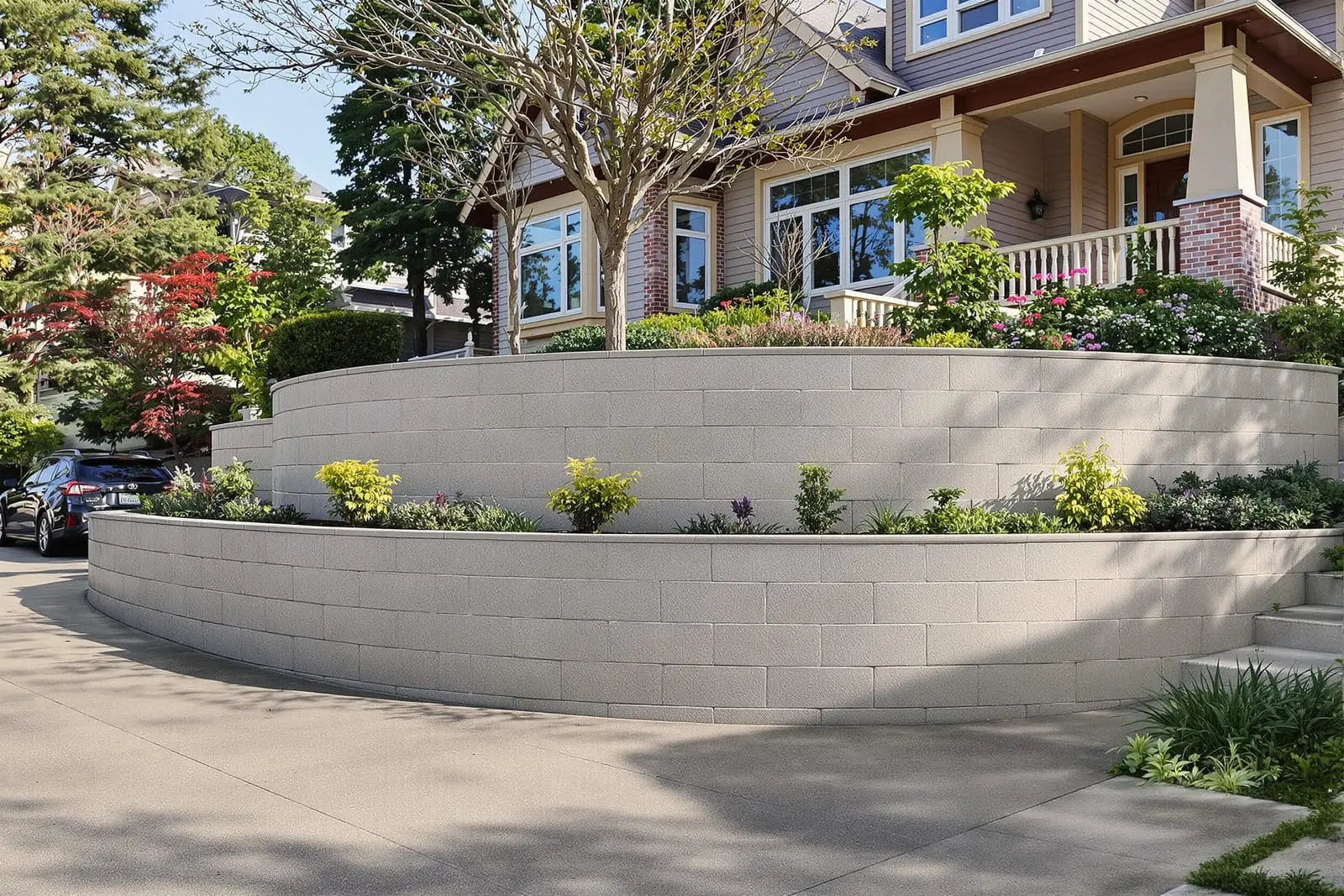
Stabilize slopes and create usable yard space with concrete retaining walls in Pittsburgh, PA. We build cast in place and modular walls designed to handle soil pressures and drainage. Our retaining wall solutions blend structural strength with clean lines that complement your landscaping.
Brava Concrete Pittsburgh provides professional concrete retaining wall throughout Pittsburgh, PA and the surrounding area. Our licensed, insured crew delivers safe, clean, on-time work with a free estimate before anything begins. Call (412) 231-9528 or request your free quote.
Concrete Retaining Walls Built for Pittsburgh Hillsides
In Pittsburgh, a concrete retaining wall is not just a nice-looking edge along your yard. It often has a real job to do: holding back a hillside, keeping a driveway from sliding, or leveling a usable area on a sloped lot. At Brava Concrete Pittsburgh, we focus first on what the wall needs to support, then on how it will look.
Most of our retaining wall projects start with a site walk. We look at slope, drainage patterns, nearby foundations, and how close we are to property lines or public sidewalks. Many Pittsburgh properties sit on fill or old cut-and-fill hillsides, so we dig small test holes to see soil type and depth. Clay-heavy soil like we have throughout Allegheny County holds water, which adds a lot of weight behind a wall. That weight must be figured into the design before anyone pours a footing.
Concrete retaining walls are a good fit in Pittsburgh because they tolerate freeze-thaw cycles better than many block systems when they are designed and drained correctly. For taller or heavily loaded walls, we often recommend poured-in-place, steel-reinforced concrete instead of just stacked modular block. If you have a tight city lot or limited access, we plan the work so we can get concrete to the wall area without tearing up your yard or neighbors' property.
How We Design and Build a Solid Concrete Retaining Wall
Brava Concrete Pittsburgh follows a clear process from design to final finish so the wall does not just look good in year one, but stays stable through many winters.
1) Layout and measurements: We mark the wall line with paint and stakes, then shoot grades to understand how much cut or fill is needed. On steeper lots in neighborhoods like Mount Washington, Beechview, or Greenfield, a small layout error can create a big height issue at one end of the wall, so we check elevations more than once.
2) Excavation and base: We excavate for the footing below frost line, typically 36 inches or deeper in our region, and cut enough space behind the wall for drainage stone. Any soft or organic material is removed. We compact the subgrade and place a layer of crushed limestone, then compact again so the footing concrete rests on firm, drained material.
3) Formwork and reinforcement: We build wood or modular steel forms to the planned wall shape and height. Inside the forms we tie steel rebar in horizontal and vertical grids sized to the wall height and loading. Corners, ends, and any step-downs receive extra reinforcement where cracking stress is higher. For taller walls we may add keyways or an extended footing to resist sliding.
4) Concrete placement: We typically use a 3,500 to 4,000 psi concrete mix suitable for exterior freeze-thaw exposure and may specify air entrainment for durability. Concrete is placed using a chute, pump, or buggy depending on access. We vibrate or rod the concrete in the forms to remove air pockets, which improves strength and appearance.
5) Curing and stripping: We allow the concrete adequate cure time before stripping forms, usually at least a couple of days for light work and longer before heavy backfilling. Rapid backfilling on a green wall is a common reason retaining walls fail, so we schedule this step carefully and monitor weather to avoid heavy rain impacts during early curing.
Drainage, Waterproofing, and Preventing Common Wall Failures
In our climate, more retaining walls fail from water and poor drainage than from low concrete strength. Brava Concrete Pittsburgh designs each concrete retaining wall with drainage as a primary feature, not an add-on.
Behind the wall, we place a layer of clean, angular drainage stone, often 12 to 24 inches thick, from the footing up to near the top of the wall. In that stone we install a perforated drain pipe (French drain) at the base, sloped to daylight or to a suitable discharge point. On tight city lots where we cannot daylight the pipe at the front, we plan tie-ins to existing storm lines or design a small sump discharge, staying within local codes.
We typically apply a waterproofing membrane or dampproof coating to the soil side of the wall before backfilling. This keeps water from soaking into the concrete and reduces freeze-thaw stress. On walls that support living spaces or sit close to basements, we are especially careful to protect against water migration toward the structure.
Weep holes may be added near the base of the wall when appropriate, particularly for shorter gravity-style walls. We also use filter fabric between drainage stone and native soil so fines do not clog the stone over time. In Pittsburgh's clay soils, this fabric is critical if you want the drainage system to keep working beyond the first few years.
Common problems we prevent include bowing or leaning from water pressure, cracking from poorly placed joints, and settlement at the toe of the wall. Control joints or scoring are planned so any shrinkage cracking follows a straight line instead of appearing randomly. Where we expect movement, such as next to existing older stone walls or foundations, we build in isolation joints so the new wall can move slightly without damage.
Design Choices, Finishes, and What Affects Cost
Not every concrete retaining wall has to look like a plain gray slab. Brava Concrete Pittsburgh offers several finish options, and those choices, along with wall height and access, are what drive your final cost.
For residential yards and visible front entrances, we often use one of these approaches:
• Smooth formed concrete, which gives a clean, modern look once the forms are pulled.
• Broom or lightly textured finishes on exposed faces for more grip and subtle shadow lines.
• Form liner patterns or a skim coat and stain to mimic stone or give an architectural look.
We can integrate concrete steps, landings, or rail post pockets right into the wall. For example, on steep Pittsburgh side yards, we frequently build a retaining wall with a stairway cut through it to create safe access from street to backyard. Built-in planters or terraced walls can soften the look and also lighten the load on any single wall.
Cost is influenced by wall height, total length, soil conditions, drainage complexity, access for equipment, and finish details. A straight 3-foot wall with easy machine access and basic drainage is on the lower end. A 7-foot wall holding back a driveway on a tight lot in Lawrenceville or Bloomfield, with limited access and more engineering, lands higher. If your project needs an engineer's stamped design, that is a separate cost, but we coordinate with local structural engineers and can handle that process.
We are up-front about what you can save money on and what you should not cut. Skipping proper footing depth or drainage to chase a low price usually leads to movement or repairs later. We would rather explain the tradeoffs clearly so you can decide what level of finish and extra features make sense for your property and budget.
Permits, Inspections, and Working in Pittsburgh Neighborhoods
Retaining walls are regulated in Pittsburgh, especially once they reach certain heights or support driveways, roads, or structures. Brava Concrete Pittsburgh helps you navigate the permit and inspection process so your concrete retaining wall is not a problem when you go to sell the home or when the city inspects.
In many cases, walls over a specific height or that carry vehicle loads require an engineered design and a building permit. We can connect you with local engineers who understand our hillside conditions and city requirements. We provide them with site measurements, soil observations, and layout so the design reflects what is actually in the ground, not just assumptions on paper.
We are familiar with working in tight city neighborhoods, from South Side Slopes to Troy Hill, where access and staging are often the biggest challenges. We plan material deliveries, concrete truck access, and pump locations in a way that reduces impact on your neighbors and limits street closures where possible. On suburban jobs around places like Ross Township or Bethel Park, we still pay close attention to property lines and utilities, since many older parcels have unmarked private drains and lines.
Before we dig, we always call for utility marking and verify any visible drains or existing walls that may affect your project. At the end of the job, we restore disturbed areas as agreed, which may include regrading, seed and straw, or coordinating with a landscaper for final plantings. Our goal is a concrete retaining wall that looks like it belongs on your property and that keeps doing its job quietly, year after year, through Pittsburgh's freeze-thaw cycles and heavy spring rains.
“
Professional concrete retaining walls, done right the first time, quality materials, honest pricing, and results that last.