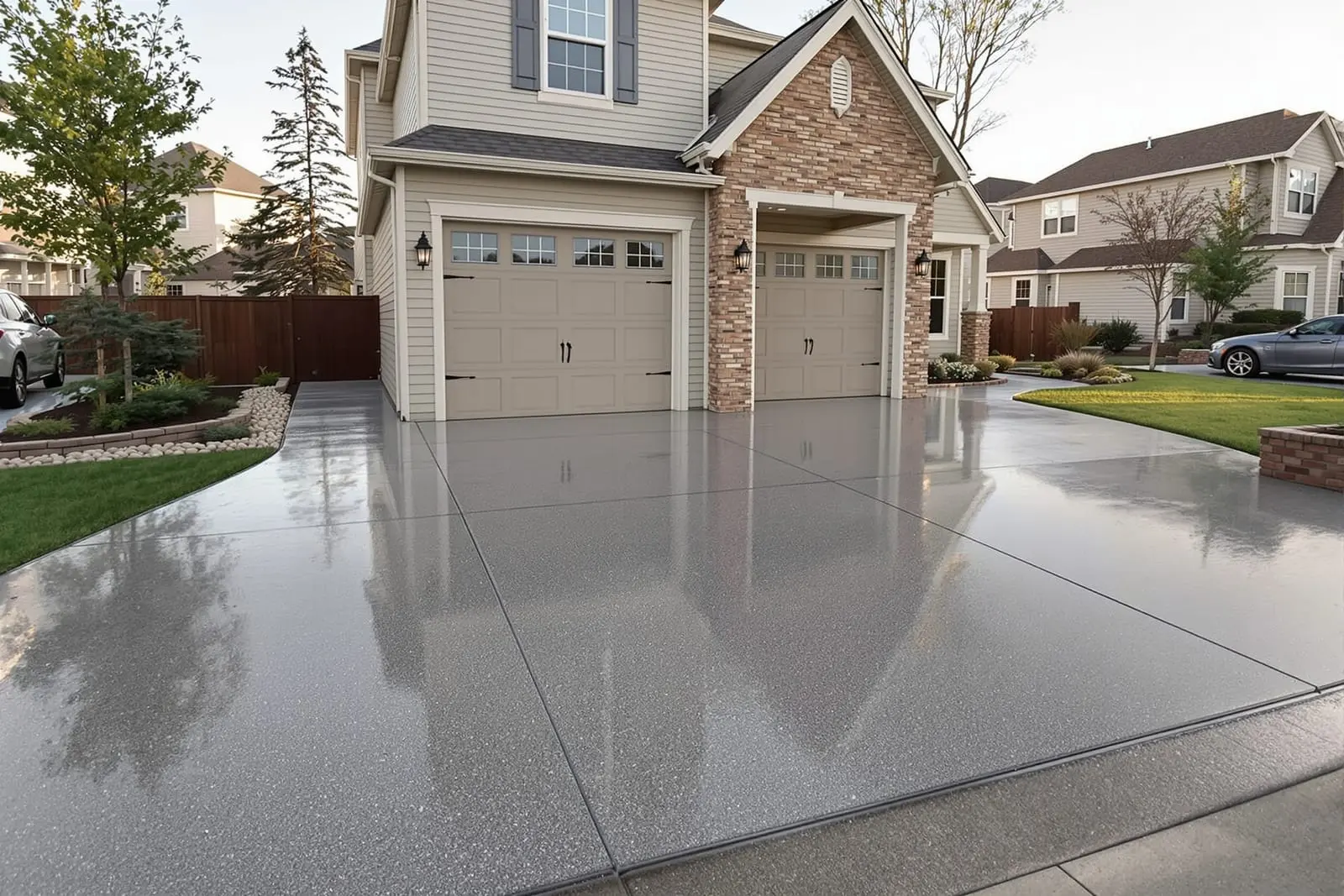
Get durable, level surfaces with new concrete garage floors in Pittsburgh, PA. We pour and finish slabs that handle vehicles, storage, and everyday use. Our team also installs and repairs basement concrete floors, focusing on proper thickness, reinforcement, and drainage considerations.
Brava Concrete Pittsburgh provides professional concrete garage floor throughout Pittsburgh, PA and the surrounding area. Our licensed, insured crew delivers safe, clean, on-time work with a free estimate before anything begins. Call (412) 231-9528 or request your free quote.
Concrete Garage & Basement Floors Built for Pittsburgh Homes
A concrete garage floor or basement slab is not just a gray surface, it is the base that supports vehicles, storage, utilities, and finished living space. Brava Concrete Pittsburgh focuses on building floors that handle Western Pennsylvania freeze-thaw, road salt, and moisture without breaking down in a few years.
Every project starts with a site visit. We measure the space, check ceiling height, look for moisture issues, and note things like floor drains, steps to the house, and low spots where water pools. In older Pittsburgh homes, basements are often out of level by an inch or more from one side to the other. We put this in writing so you know exactly what we are correcting.
We talk through how you plan to use the space. A garage that holds a full-size pickup, snowblower, and tool cabinets needs a different slab thickness and reinforcement than a basement that will be finished with carpet or luxury vinyl plank. This use-based approach is what guides our mix design, reinforcement, and layout, not a one-size-fits-all template.
Brava Concrete Pittsburgh is familiar with city neighborhoods like Lawrenceville and Brookline, as well as suburbs like Cranberry, Bethel Park, and Monroeville. Each area can have different access challenges, older foundations, or HOA rules about exterior work that affects garage entries. We factor all of that into the planning so you are not surprised mid-project.
How We Install Long-Lasting Concrete Garage Floors
For a new or replacement concrete garage floor, the base is the first priority. We remove any loose stone, broken concrete, or soft soil, then compact the subgrade with mechanical plate compactors. In many Pittsburgh garages we add at least 4 inches of crushed limestone for drainage and stability, especially where clay soils are present.
We usually pour a 4 inch slab for standard residential garages and upgrade to 5 or 6 inches for heavy trucks, commercial vans, or workshop use. Brava Concrete Pittsburgh typically uses a 4000 psi air-entrained concrete mix for garages. Air entrainment helps the slab hold up to freeze-thaw cycles and road salt tracked in from I-79, Route 51, and the parkways.
Steel reinforcement is critical. Wire mesh alone is often not enough, especially for older detached garages with questionable bases. We commonly install #3 or #4 rebar in a grid, tied and supported on chairs so it stays in the middle of the slab instead of ending up at the bottom. For drive-on areas at the garage door we may add extra reinforcement or a thickened edge to prevent cracking where vehicles repeatedly cross.
We cut control joints at planned locations to manage where the concrete will crack as it naturally shrinks. These are usually spaced 8 to 12 feet apart and at interior posts. Around floor drains, posts, and steps, we adjust joint layout so cracks do not appear in visible walk areas. After finishing the surface, we apply a curing method that matches conditions, often a curing compound in summer and insulated coverings in colder months, to prevent rapid moisture loss and surface dusting.
Basement Concrete Floors: Leveling, Moisture, and Finishing Options
Pittsburgh basements are often the most challenging part of a house. Some are old coal cellars with uneven dirt floors, others have thin, cracked slabs that rise and fall from past movement. Brava Concrete Pittsburgh handles both complete replacement and topping solutions depending on the condition.
We start with moisture testing. High groundwater and hillside construction are common in neighborhoods like Mt. Washington, Dormont, and Morningside. We look for active water entry, mineral deposits, and musty odors. If there is ongoing seepage, we may recommend interior drainage or perimeter French drains be installed before or along with the new slab. Pouring fresh concrete over active water problems just traps the issue.
For basements that will be finished as living space, we often install a vapor barrier, usually a 10 mil or thicker polyethylene, over a compacted stone base. This cuts down on moisture migrating through the slab, which helps protect flooring and reduce mold risk. If the slab will receive tile or luxury vinyl, a reasonably flat surface is crucial, so we laser-level the forms and screeds and may use a self-leveling topping in localized low spots.
Slab thickness in basements is typically 4 inches, with welded wire mesh or rebar where needed. We pay special attention to transitions at stairs, furnace clearances, and door thresholds so you do not end up with awkward steps or doors that no longer fit. If you plan in-floor radiant heat, we coordinate with your plumber or HVAC contractor, tying tubing to the reinforcement and maintaining proper cover so future anchors do not puncture lines.
Surface finish depends on how you will use the space. For storage basements, a smooth steel-trowel finish is usually enough. For areas that will get epoxy or a decorative overlay later, we prepare a slightly textured profile to help coatings bond. We can also slope to floor drains where building codes and existing sewer connections allow, which is very useful in utility rooms with water heaters or laundry.
Cost Drivers and Local Factors for Concrete Garage Floors and Basements
Prices for a concrete garage floor or basement slab in the Pittsburgh area depend on several real variables. Brava Concrete Pittsburgh is upfront about these so you understand where your money is going.
Accessibility is a major factor. Tight city lots, rear-access garages, or steep driveways in areas like Squirrel Hill or Beechview can require smaller trucks, pump rentals, or more hand work, all of which affect labor. Removing an old slab with rebar, embedded stone, or unexpected thickness also adds cost, so we try to verify depth and conditions before final pricing.
Thickness and reinforcement have a direct impact on cost but also on performance. A basic 4 inch slab with wire mesh costs less than a 5 inch slab with a full rebar grid and thickened edges, but the heavier design is often worth it for daily vehicle use and workshop loads. We explain those tradeoffs instead of just offering a single number.
Moisture and drainage solutions in basements can also be a significant line item. Adding under-slab drainage, sump pits, or exterior waterproofing is more investment upfront but can prevent long-term issues like flooring failure, mold, or slab heaving. Pittsburgh’s hilly terrain and older stone foundations mean many basements benefit from at least a vapor barrier and proper edge sealing.
Finishing options affect cost too. A plain broom finish in a garage is cheaper than a mechanically prepped and sealed surface or decorative flake epoxy applied later. In basements, tighter flatness tolerances for finished flooring require more labor and possibly materials like self-leveling compounds.
We also take into account local code requirements. In the City of Pittsburgh and many surrounding municipalities, full structural changes to foundations or the addition of new habitable basement space can trigger permits and inspections. Simple slab replacements usually fall under repair work, but when the project connects to egress changes or structural alterations, we advise you on the need for permits and can coordinate with your architect or engineer when required.
Common Concrete Floor Problems and How Brava Concrete Pittsburgh Handles Them
Many of our garage and basement projects in Pittsburgh start with problems caused by past shortcuts. Understanding what went wrong is part of making your new concrete garage floor or basement slab last.
One frequent issue is surface spalling and flaking from winter road salt. Older slabs often used non air-entrained mixes or were not cured correctly. In some cases we can grind and resurface if the damage is shallow. However, when scaling goes deeper, full replacement with an air-entrained mix and proper curing is the right fix.
Another common problem is settlement and heaving. In garages, this often shows up where the slab meets the driveway, creating a trip edge or allowing water to run back toward the foundation. We investigate whether the cause is poor base compaction, water washing out subgrade, or tree roots. The solution might involve improving drainage, replacing the base material, adding control joints, and in some cases installing dowels into the foundation to stabilize the new slab edge.
Basements often suffer from chronic dampness, efflorescence, and thin, brittle concrete that dusts when you sweep. Brava Concrete Pittsburgh addresses this by dealing with water first, then installing a properly thickened and reinforced slab over a vapor barrier. Where headroom is limited, which is common in pre-war Pittsburgh homes, we balance slab thickness with ceiling height and sometimes remove old material down to a lower base to maintain enough headroom.
We also plan for the future. For garages, we can leave marked locations or sleeves where you may later add a lift, partition walls, or built-in storage. For basements, we coordinate slab penetrations for bathrooms, utility lines, or future wet bars so you do not have to cut through a brand-new floor. Our goal is not just a fresh gray surface but a structural and functional upgrade matched to how Pittsburgh homeowners actually live and work in these spaces.
“
Professional garage & basement concrete floors, done right the first time, quality materials, honest pricing, and results that last.
Brava Concrete Pittsburgh
Garage & Basement Concrete Floors Across Our Service Area