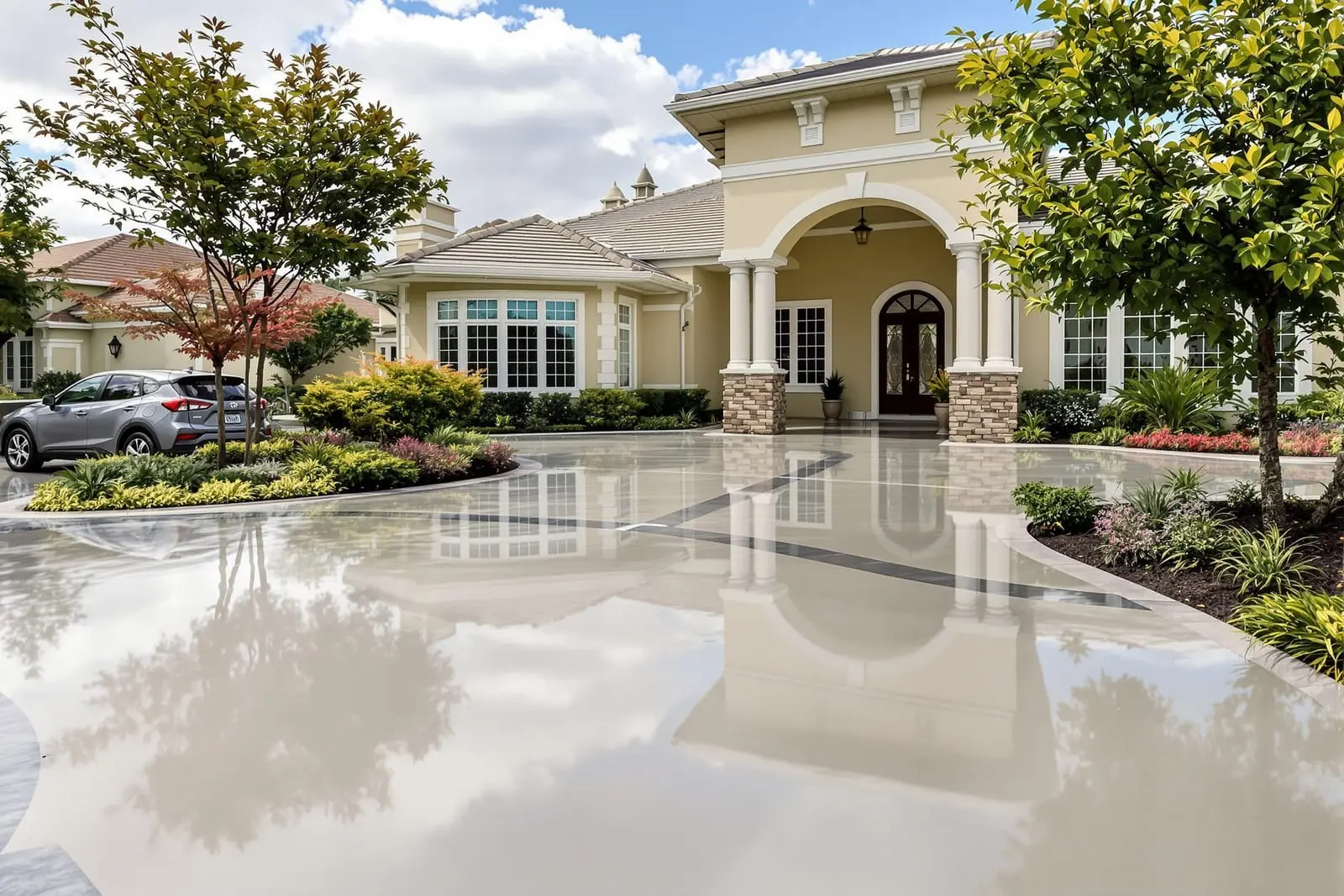
Protect your surfaces with commercial concrete sealing in Pittsburgh, PA. We apply sealers and coatings that resist chemicals, traffic, and weather on floors and exterior flatwork. Proper maintenance extends the life of your investment and keeps your property looking sharp.
Brava Concrete Pittsburgh provides professional commercial concrete sealing throughout Pittsburgh, PA and the surrounding area. Our licensed, insured crew delivers safe, clean, on-time work with a free estimate before anything begins. Call (412) 231-9528 or request your free quote.
Protecting Pittsburgh’s Commercial Concrete From Weather, Salt, and Wear
Commercial concrete in Pittsburgh takes a beating from freeze-thaw cycles, de-icing salt, and heavy foot and vehicle traffic. Without proper sealing and coatings, you start to see scaling, surface pop-outs, joint spalling, and deep staining that are hard or impossible to fix later.
Brava Concrete Pittsburgh focuses on commercial concrete sealing that fits how your property is actually used. A downtown parking deck has different needs than a warehouse in Neville Island or a medical office in Monroeville. We look at traffic patterns, snow removal methods, salt use, and drainage before recommending a system. That way, the sealer or coating you pay for actually holds up.
Around Pittsburgh, the biggest threats to commercial concrete are winter salt, water intrusion, and freeze-thaw movement. Good sealing slows all three. The right product makes it harder for water and salt to penetrate, reduces dusting, makes cleanup faster, and keeps your concrete from breaking apart at the top surface.
Whether you manage a strip mall, church, multi-story office, or industrial facility, Brava Concrete Pittsburgh can inspect your concrete and give direct advice on what you need now, what can wait, and what is not worth doing. Our goal is to protect your slabs, not sell you something that does not match the conditions on site.
How Our Commercial Concrete Sealing Process Works
On every commercial concrete sealing project, Brava Concrete Pittsburgh follows a specific process so the sealer or coating bonds properly and lasts as long as possible.
1. Site evaluation and moisture checks. We start with a walk-through to note cracking, scaling, oil staining, old coatings, and drainage issues. For interior slabs or areas over occupied space, we may use moisture meters or plastic sheet tests to see if water vapor is pushing up from below. This is important in older Pittsburgh buildings and parking decks where waterproofing may be limited.
2. Surface cleaning and prep. Proper surface prep is the part most people do not see, but it determines how long the job lasts. For most exterior commercial slabs we use pressure washing, biodegradable degreasers, and mechanical scrubbing to remove dirt, oil, and loose material. For heavy staining or failing coatings we may shot blast or lightly grind the surface to create a clean, textured profile that sealer can grip.
3. Repairs before sealing. We fill non-structural cracks, spalls, and pop-outs with compatible repair mortars or polyurea products. On joints in loading docks and warehouse floors, we clean and refill with joint filler that can handle forklift wheels. Sealing over unrepaired damage just traps problems, so we address these issues first.
4. Choosing the right sealer or coating. Only after we see the cleaned surface do we finalize the specific system. For many exterior walkways and sidewalks we use penetrating silane or siloxane sealers that soak in and leave no film, which helps with slip resistance in wet and icy conditions. For loading docks and industrial floors we may specify high-build epoxy or polyaspartic coatings that create a thicker protective layer.
5. Application under the right conditions. Weather matters. In the Pittsburgh area that means working around rapid temperature swings and humidity. We watch surface temperature, dew point, and forecast. We schedule sealing when the concrete is dry enough and will stay that way long enough for proper curing. This may mean evening or weekend work to avoid rain or daily foot traffic.
6. Curing and handoff. Once applied, the system needs a set amount of time before light traffic and full use. On a retail plaza this might be 24 hours for a penetrating sealer. On a thicker coating system in a warehouse, it could be 48 to 72 hours. We plan phasing so you keep as much of your site open as possible while still giving the product time to cure.
Sealing and Coating Options for Different Pittsburgh Properties
Different commercial properties in Pittsburgh have very different demands, so Brava Concrete Pittsburgh uses several categories of commercial concrete sealing and coatings instead of a one-size-fits-all product.
Penetrating sealers. These are popular for exterior sidewalks, plazas, church steps, school walkways, and exposed parking decks. The sealer soaks into the concrete, lines the pores, and helps repel water and salt. The surface appearance changes very little, which is useful for historic facades and older neighborhoods where you want to keep an original concrete look. They are breathable, so they handle moisture better on older slabs.
Film-forming sealers. Acrylic and polyurethane sealers sit more on the surface and can slightly enhance color or sheen. These work well for decorative commercial concrete, stamped entryways, outdoor dining patios, and light traffic areas that benefit from a more finished appearance. They are more sensitive to prep and recoat cycles, so we outline a maintenance schedule with you.
High-build epoxy and polyaspartic systems. In warehouses, production areas, commercial kitchens, and maintenance shops, we often use multi-layer systems. Primer, body coat, and topcoat can be combined with non-slip aggregate and striping. Epoxies supply chemical resistance and build, while polyaspartics can provide quicker return to service and better UV stability. In loading docks that see steel-wheeled carts and pallet jacks, this kind of coating can significantly cut down on surface wear.
Commercial parking garages and ramps. For garages, especially those in downtown Pittsburgh and Oakland, we may recommend a combination of traffic-bearing membranes on driving lanes and penetrating sealers on parking stalls. Membranes are thicker, flexible coatings that help bridge small cracks and block water and de-icing salts from reaching the reinforcing steel. Choosing the right membrane thickness and texture is important so you get traction in winter without tearing up tires.
Decorative and safety-focused options. When needed, we can incorporate non-slip aggregates, color tints for safety zones, or striping within the coating system. On sloped exterior ramps or areas where ice is common, we can build in added texture instead of relying only on winter salt. This has been useful for medical facilities, assisted living properties, and schools where slip risk is a concern.
What Affects Cost and Timeline for Commercial Concrete Sealing
Owners and facility managers usually want to know two things right away: how much will commercial concrete sealing cost, and how long will it take. Brava Concrete Pittsburgh lays this out clearly before work starts so you can plan around tenants, employees, and customers.
Surface condition. Clean, newer concrete with minimal damage costs less to seal than older slabs with scaling, oil saturation, or failed coatings. If we have to shot blast, grind, or do significant repairs, that adds labor and materials. For example, a lightly soiled retail sidewalk may just need pressure washing and a penetrating sealer. A twenty-year-old warehouse floor with oil-soaked areas will need degreasing and mechanical prep before a coating will stick.
Type of sealer or coating. Penetrating sealers are typically the most economical. High-performance traffic membranes and multi-layer epoxy or polyaspartic systems cost more per square foot, but they provide more protection and longer life. We will usually give you at least two options, such as a basic penetrating sealer versus a higher build coating, and explain the pros, cons, and life cycle costs of each.
Access and phasing. Busy sites in the Pittsburgh region like active shopping centers, hospitals, and schools often require night or weekend work, sectioning off small areas at a time, and extra setup and cleanup each shift. That adds labor hours but lets you stay open. For some industrial clients we plan the work during scheduled shutdowns or holiday breaks.
Weather windows. Local weather can affect schedule and cost. If we have to tent an area, add heat, or reschedule for repeated rain or cold snaps, there can be added costs for return trips or climate control. To reduce this risk, we track forecasts closely and try to cluster exterior work during favorable stretches.
Long-term savings. A realistic way to look at commercial concrete sealing is cost per year of service. Spending more now on the right system can delay very expensive structural repairs, tear outs, or replacement. We can walk you through examples from past Pittsburgh projects, such as parking decks where regular sealing kept chloride damage to a minimum compared to similar structures that went unprotected.
Commercial concrete sealing is not glamorous, but it has a big impact on the long-term health and safety of your property. Brava Concrete Pittsburgh concentrates on practical, local experience, not generic national products that ignore our climate and building stock.
We are familiar with the common issues in this area: garages that leak onto lower levels because they were never properly sealed, loading docks that crumble from winter salt tracked in by trucks, and entry steps that start to break apart a few years after installation. Our work focuses on preventing those problems or stabilizing them before they grow into structural issues.
Before we quote, we actually look at your site and talk with the people who use it: property managers, maintenance supervisors, or business owners. We ask how they plow, what kind of equipment runs on the floors, whether oil and chemicals are present, and what kind of appearance they want. That information guides product selection more than any brochure.
Communication is straightforward. We tell you what preparation is needed, what areas will be off limits and for how long, and what you need to do before we arrive, such as clearing vehicles or equipment. For multi-tenant buildings, we can help you draft notices that explain temporary closures, so you are not fielding constant questions during the project.
If you want to explore commercial concrete sealing for your property in Pittsburgh or surrounding areas, Brava Concrete Pittsburgh can start with a simple on-site assessment. You will get clear recommendations, realistic pricing, and a plan that matches how your facility actually operates, not a one-size-fits-all product sheet.
“
Professional commercial concrete sealing & coatings, done right the first time, quality materials, honest pricing, and results that last.
Brava Concrete Pittsburgh
Commercial Concrete Sealing & Coatings Across Our Service Area