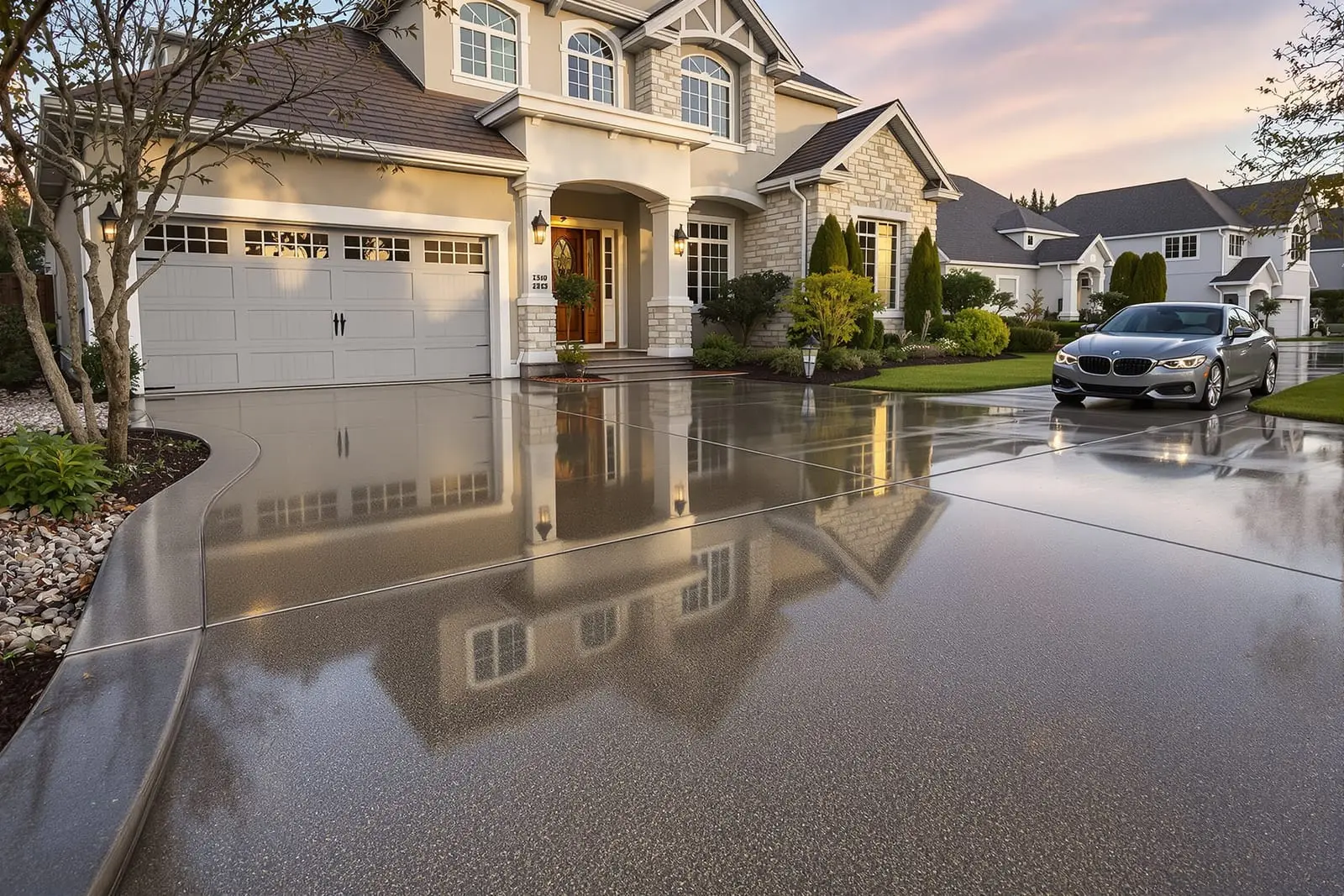
Protect your investment with professional concrete sealing in Pittsburgh, PA. We clean and seal driveways, patios, and walkways to resist moisture and stains. Regular maintenance helps your concrete look better and last longer in local freeze and thaw conditions.
Brava Concrete Pittsburgh provides professional concrete sealing throughout Pittsburgh, PA and the surrounding area. Our licensed, insured crew delivers safe, clean, on-time work with a free estimate before anything begins. Call (412) 231-9528 or request your free quote.
Concrete Sealing in Pittsburgh: What It Actually Does for Your Concrete
Concrete sealing is not a luxury finish. In Western Pennsylvania, it is basic protection against freeze-thaw cycles, deicing salts, and constant moisture. When Brava Concrete Pittsburgh seals a driveway, patio, or walkway, we are trying to slow down how quickly water, salt, and oil can get into the surface, then expand, stain, and break it apart.
In our climate, unsealed concrete often starts to pit and flake in 3 to 5 winters, especially in driveways facing south or west where the sun melts snow during the day and it refreezes at night. Sealer acts like a breathable raincoat. It lets trapped moisture escape from inside the slab but makes it harder for new water and chemicals to soak in from the top.
For most Pittsburgh homes, we see two main situations. First, older concrete on 1940s to 1970s houses in neighborhoods like Brookline, Dormont, and Greenfield that was never sealed, now showing pitting and salt damage. Second, newer suburban driveways and stamped patios in areas like Cranberry or South Fayette that were sealed once, then ignored for 8 or 10 years. In both cases, a proper cleaning and reseal can make the surface last longer and look noticeably better.
The value of concrete sealing is measured in delayed repairs. Resealing a driveway every few years costs a fraction of tearing out panels that are spalling or crumbling because salt and water have been soaking in unprotected for years.
How Brava Concrete Pittsburgh Seals Concrete: Step by Step
Our concrete sealing process is methodical. We are not just rolling on a shiny coat. The quality of the prep work decides how long any sealer will last.
1. Inspection and moisture check. We start by walking the slab, looking for cracks, hollow spots, and previous coatings. We note areas that hold water after rain, salt damage near the street, and oil or rust stains. If the slab is visibly damp or you recently power washed it yourself, we may schedule sealing for a later day so trapped moisture can escape. Applying sealer over wet concrete is one of the fastest ways to cause peeling and clouding.
2. Deep cleaning. For driveways and patios, we typically use a professional surface cleaner, not just a wand, to evenly wash the concrete. Degreasers break down oil spots from parked cars. Rust removers handle fertilizer or metal stains. In older city drives that have years of soot and grime, we may need multiple passes. Any loose sealer from a previous job is removed so our new coat can bond properly.
3. Minor repairs. Before sealing, we fill small cracks and control joints that have opened too wide. For hairline cracks we often use flexible sealants that move with the slab, for larger cracks we may use sand and concrete repair products. We explain when a crack is just cosmetic and when it is a sign of movement that might need further attention.
4. Drying period. After cleaning, the concrete must dry. In Pittsburgh humidity, this is usually 24 hours, sometimes longer for shaded North Side alleys or tight South Hills side yards with little airflow. We schedule sealing when the weather forecast supports a clean cure period, which means no heavy rain and no overnight freezing.
5. Sealer application. We apply sealer with sprayers, rollers, or a combination, depending on surface texture and product type. For broom-finished driveways we focus on even coverage without puddling. For stamped concrete we work sealer into the texture so it protects the colored release and any antiquing.
6. Final check and cure. Once applied, we keep people, cars, pets, and lawn equipment off the surface for the time recommended by the manufacturer. Light foot traffic is often okay after a few hours, but full vehicle traffic typically waits 24 to 48 hours. We leave you with specific instructions, not guesses, based on the exact sealer used.
Types of Concrete Sealers We Use and When We Use Them
Different surfaces around Pittsburgh homes call for different concrete sealing approaches. Brava Concrete Pittsburgh does not use one product on everything because driveways, basements, and stamped patios all behave differently.
For standard driveways and sidewalks, we commonly use penetrating sealers, usually silane, siloxane, or a blend. These products soak into the slab and chemically bond within the concrete. They do not leave a thick, shiny film on top, which helps keep traction in winter. They are especially effective at reducing salt and water absorption without noticeably changing the surface appearance.
For decorative or stamped concrete patios, porches, and pool decks, we often use a film-forming acrylic sealer. This type enhances color and brings out the detail in the stamp pattern. We select low gloss, medium gloss, or high gloss based on your preference and how slippery the area can safely be. Around pools or on sloped patios we usually recommend lower gloss and the addition of a fine non-slip additive.
In damp or partially below-grade areas, such as many Lawrenceville or Mt. Washington back patios that sit near retaining walls, we are more cautious. Excess moisture pressure from behind the slab can cause some film-forming sealers to bubble or turn cloudy. In those cases we often lean toward breathable penetrating products. We will not promise a mirror finish in a spot that is constantly damp, but we will tell you what will hold up and what will not.
We also consider existing coatings. If your stamped patio already has a thick acrylic sealer from a previous contractor, we need to determine if it is compatible with our product. Sometimes we can clean and recoat, other times the old sealer must be stripped, which adds cost and time. We explain these options in plain language before you commit.
Maintenance: What You Should Actually Do Between Seals
Concrete sealing works best with simple, consistent upkeep. You do not need complicated cleaners or constant scrubbing, but you should follow a few specific habits in Pittsburgh’s climate.
Keep the surface reasonably clean. Rinse driveways and patios a few times per year to remove road salt, soil, and leaves. Organic debris that sits in damp piles along edges can leave dark stains and encourage surface deterioration, especially in shaded yards under large oak or maple trees common in older neighborhoods.
Limit harsh chemicals. Standard deicing salt is tough on concrete. We advise using calcium magnesium acetate or sand for traction when possible, especially during the first two winters on newer concrete. Oil and fuel spills should be blotted and cleaned quickly. Sealer slows staining, but it does not make concrete stain-proof, particularly with hot transmission fluid or power steering leaks.
Watch for changes. If water no longer beads up on the surface and instead quickly darkens the concrete, the sealer is reaching the end of its life. That is usually around every 2 to 4 years for film-forming sealers and 3 to 6 years for penetrating sealers, depending on sun exposure, snow plowing, and traffic. Driveways at the bottom of steep hills or closest to main roads with heavy salt use typically need attention sooner.
Avoid over-sealing. Applying extra layers of film-forming sealer every year eventually leads to cloudiness, peeling, and a slippery surface. We often see this on do-it-yourself projects in suburban patios. More is not better. When we schedule maintenance, we evaluate whether the slab needs a full recoat, a light refresh, selective touch ups, or in some cases sealer stripping before starting over.
What Affects the Cost of Concrete Sealing in Pittsburgh
Concrete sealing pricing is not just dollars per square foot. Brava Concrete Pittsburgh looks at several practical factors that directly affect labor, materials, and the outcome.
Square footage and layout matter. A straight, open driveway in a level suburban lot is faster and cheaper per square foot than a tight, broken-up urban driveway squeezed between two brick houses in Beechview or Polish Hill, where hose access is limited and edging takes more time.
Surface condition plays a major role. Lightly weathered, fairly clean concrete that only needs a rinse and seal costs less to handle than slabs with heavy oil staining, tire marks, embedded leaf stains, or multiple layers of failing sealer. Degreasers, rust removers, and stripping products add both material cost and labor hours. Significant crack repair or joint caulking also increases the scope.
Type of sealer and performance level matter too. Penetrating sealers that resist road salt and freeze-thaw damage in our climate are more expensive than basic hardware-store options for a reason. Quality acrylics designed for decorative concrete cost more than generic sealers that tend to yellow or peel quickly in sun-exposed patios.
Access and timing can also affect cost. If water access is far from the work area, or we need to run hoses through a finished basement to reach a rear patio, we plan more setup and protection time. Sealing in shoulder seasons may require tighter weather windows, which can limit scheduling and sometimes add trips.
We provide clear written estimates that line-item the steps: cleaning, minor repairs, sealer type, and number of coats. That way you can see exactly what you are paying for and what, if anything, could be postponed or phased if you are working within a budget.
Choosing a Concrete Sealing Contractor in Pittsburgh
Concrete sealing seems simple until it goes wrong. We regularly correct issues from rushed or inexperienced work across the Pittsburgh area, such as thick milky patches, peeling near garage doors, and slippery stamped patios.
When you compare contractors, ask specifically what products they use and why. If they cannot tell you whether a sealer is penetrating or film-forming, or how it performs in freeze-thaw conditions, be cautious. Ask how they handle damp concrete, how long they allow for drying after cleaning, and what they do if the forecast changes. In our climate, weather planning is as important as the sealer brand.
Brava Concrete Pittsburgh is focused on concrete, not as a side add-on to unrelated services. We understand how different mixes, ages, and finishes behave across local neighborhoods, from century-old city sidewalks to newly poured stamped patios in recent developments. We inspect first, then match the sealer and process to the actual slab, not to a one-size-fits-all package.
We also talk through expectations. If your driveway already has deep scaling, sealer will not rebuild missing concrete, but it can slow further damage and make the surface easier to keep clean. For high-traffic commercial spots or steep hills, we might recommend more frequent inspections. Our goal is to give you a realistic picture of what sealing and maintenance can achieve, how long it should last, and what you need to do between visits to get the full benefit.
“
Professional concrete sealing & maintenance, done right the first time, quality materials, honest pricing, and results that last.
Brava Concrete Pittsburgh
Concrete Sealing & Maintenance Across Our Service Area